As global citizens, achieving institutional goals and SDGs by 2030 requires that we all work together by pooling our resources to bring about the needed changes in our world.
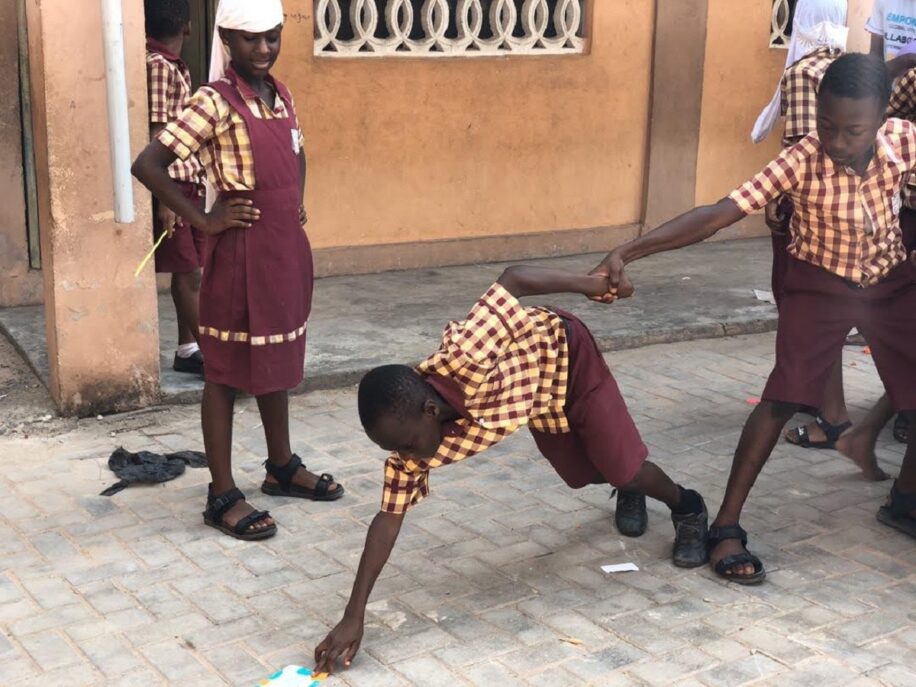
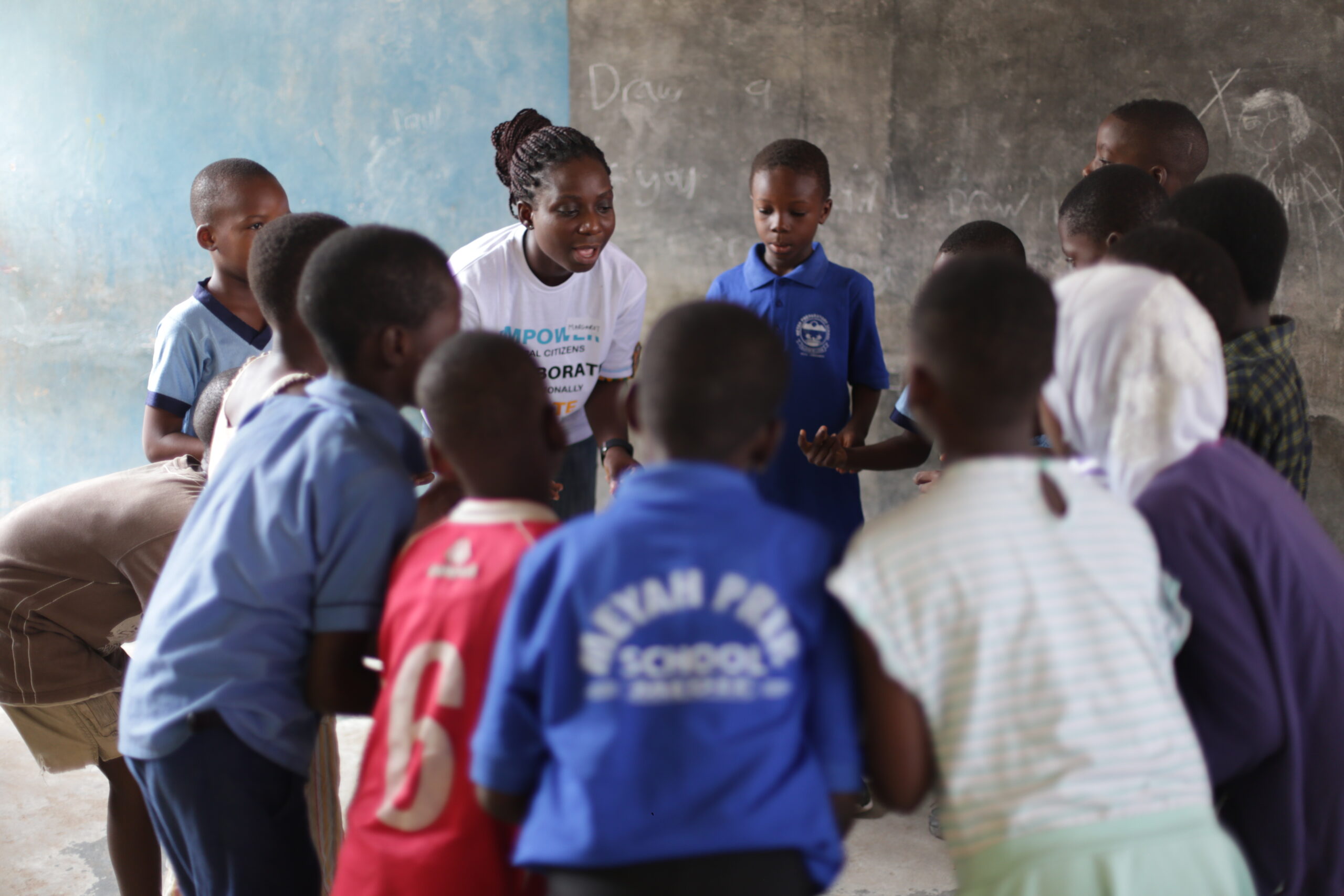
As the name implies, the circle of trust is a Game-Based learning activity which teaches students the essence of working together as a team in achieving the most unlikely results and solving problems.
How the game is played: Items needed
Human rights cards: a couple of cards with some human rights printed on them.
An open space
Activities
Just as is accustomed, the entire group is split into different teams. Preferably two if the class size is considerably small.
A circle is drawn on the floor for both teams. Preferably both teams should be at opposite sides with an open space between them.
The teams clump together inside their respective circles.
The space outside the circles is the lava and students are not allowed to touch this space.
The human rights cards are scattered on the lava at a fair distance from both circles.
Both teams have to devise a way to get as many cards as they can from the lava without touching the ground. This can only be achieved by working together.
Winner
The team which picks the most cards without touching the lava is declared the winner.
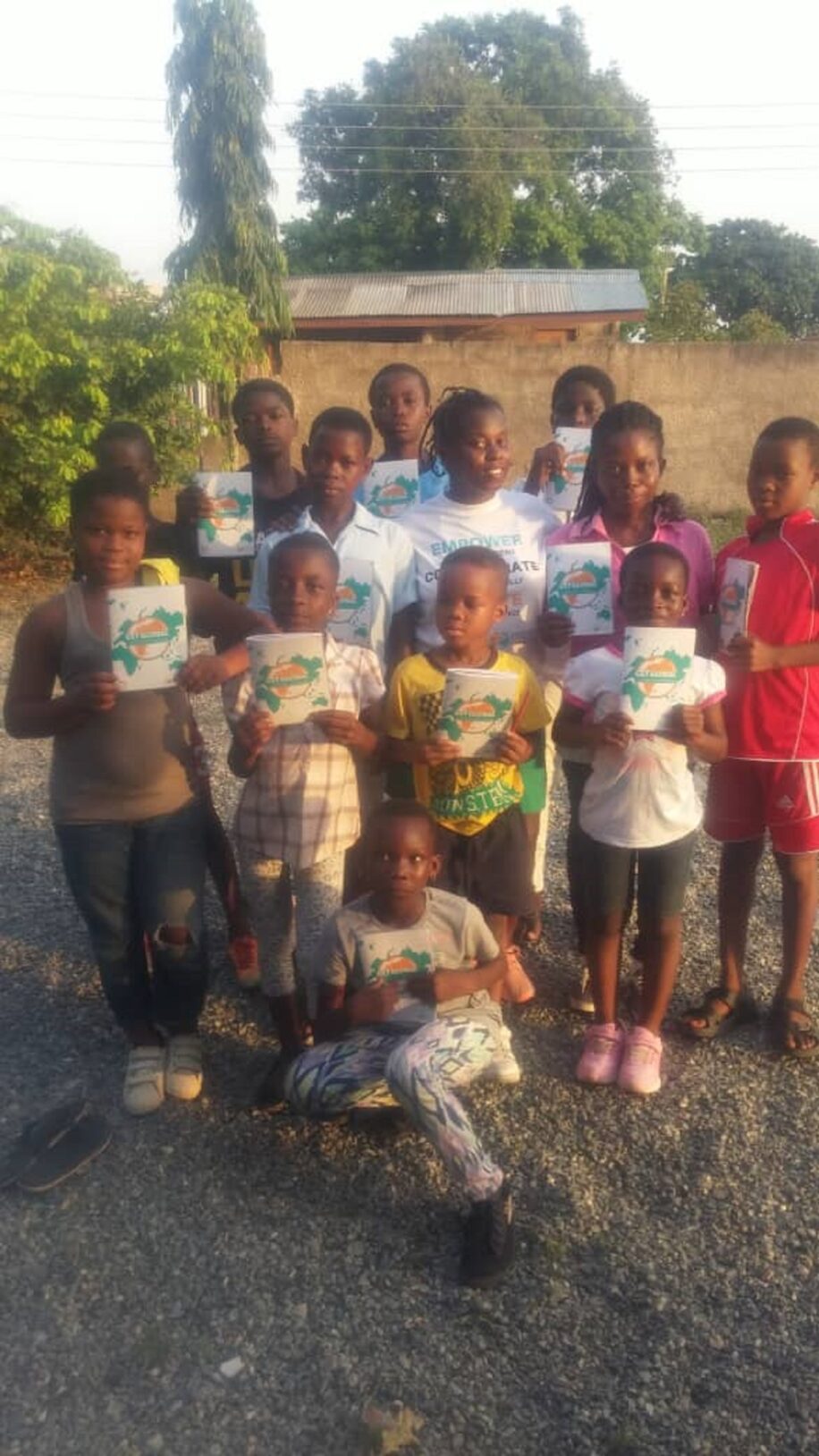
It is heart-warming to hear children call upon you when time is up for their activities. It is never a dull moment working with future leaders, especially when it’s aimed at shaping them for that future. After the distribution of the COVID 19 Workbook, most parents became curious about this book and Move The World as a whole.
Every parent wanted a workbook for their child upon seeing the contents. It is a great excitement within because I feel I have impacted the lives of others positively just by availing myself for this initiative. I believe change is not only about the physical things changing from bad to good but also making others see things differently.
Children in my community now have started to see themselves beyond their immediate community. It is our collective efforts at Move The World that has brought about this impact. In my community, I do not only inspire the children but they also have the name of Move The World embedded in gold in their hearts.
“The diversity in the human family should be the cause of love and harmony as it is in music where many different notes blend together in making perfect chord” –Abdu’l – Baha
Connecting with others often feels good. It is the feeling of empathy and kindness for others. Feeling enough trust with someone to share a sad experience or something you are upset about can be a very strong way of connecting with someone as well.
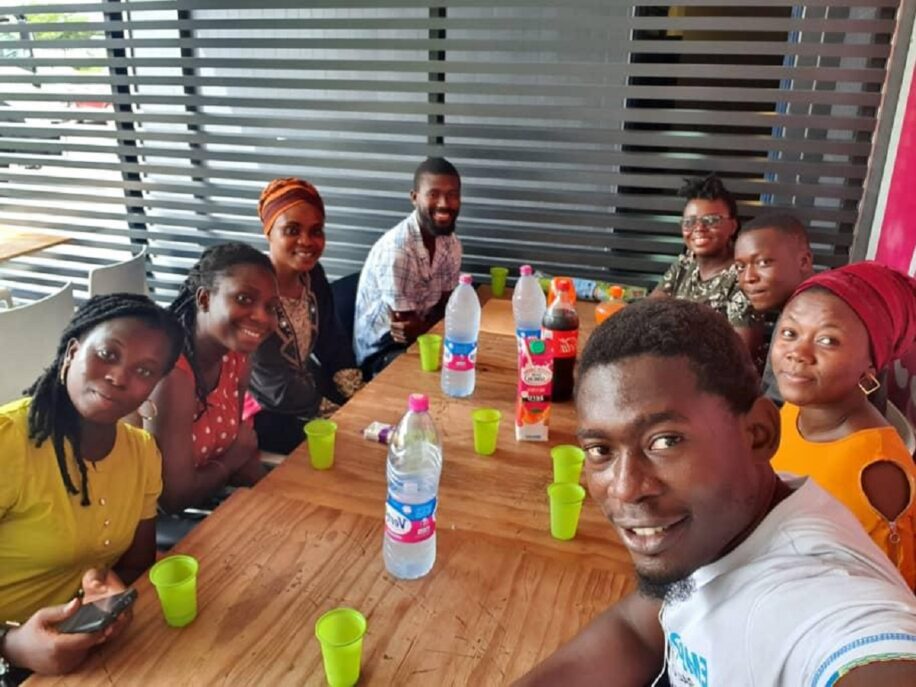
Feeling connected is the ultimate human condition. We as an organization are able to be our best possible self and feel valued and rewarded for this. We love what we do and as a team we connect to each other, this feeling of connection builds a critical foundation of trust in which employees feel they can have a voice and can make a difference. This is the best possible result for both leaders and employees, teams and organisations.
When employees are encouraged to connect, communicate and collaborate better, this leads to an increase in productivity, not to mention happiness. This, in turn, has a positive impact on retention, company loyalty, and of course, the overall performance of the organisation.
“Our greatest happiness does not depend on the condition of life in which chance has placed us, but is always the result of a good conscience, good health, occupation, and freedom in all just pursuits” -Thomas Jefferson
The aim of Goal 3 is to achieve a possible win over the fight against almost every disease. By promoting healthy lifestyles, preventive measures and modern, efficient healthcare, we are making huge strides in achieving this goal.
Interesting Facts To Note
17,000 fewer children die each day than in 1990, but more than five million children still die before their fifth birthday each year.
Children born into poverty are almost twice as likely to die before the age of five as those from wealthier families.
Children of educated mothers—even mothers with only primary schooling—are more likely to survive than children of mothers with no education.
Despite determined global progress, an increasing proportion of child deaths are in Sub-Saharan Africa and Southern Asia. Four out of every five deaths of children under age five occur in these regions.
Progress Made So Far
Over the last 15 years, the number of childhood deaths has been cut in half. Before the pandemic major progress has been made in improving the health of millions of people, increasing life expectancy, reducing maternal and child mortality and fighting against leading communicable diseases.
Coverage of the required three doses of the vaccine that prevents diphtheria, tetanus and pertussis increased from 72 per cent in 2000 to 85 per cent in 2015 and has remained unchanged between 2015 and 2017
MTW’s Involvement In Achieving Goal 3
Goal 3 is one of the key goals treated under the Get Global Program designed by Move The World.
In helping achieve this goal, Get Global Programme has the objectives of enhancing the understanding of mental health as important as physical health and the importance of their health and bodies.
Our effective facilitation procedure ensure by the end of the session, skills in leadership, self-awareness, coordination, memory, active listening and empathy have been improved.
The Passport Exercise coupled with other engaging activities such as the Half-Way Check In, Health Bingo and Lines of Communication consist of some of the creative ways through which the youth are engaged.
State of Goal 3 During COVID19
COVID19 classified as a pandemic that has literally affected every aspect of human life and has literally caused a halt to almost human activities has proven to have a considerable level of impact on achieving good health for the people. The pandemic provides a watershed moment for health emergency preparedness and for investment in critical 21st century public services.
What You Can Do To Help Achieve Goal 3
More efforts are needed to fully eradicate a wide range of diseases and address many different persistent and emerging health issues. By focusing on providing more efficient funding of health systems, improved sanitation and hygiene, and increased access to physicians, significant progress can be made in helping to save the lives of millions.
In conclusion
Concerted efforts are required to achieve universal health coverage and sustainable financing for health, to address the growing burden of non-communicable diseases, including mental health, and to tackle antimicrobial resistance and determinants of health such as air pollution and inadequate water and sanitation.
Skills training is one of the tools one can have to improve in life. As Lao Tzu stated “Give a person a fish and you feed them for a day. Teach a person to fish and you feed them for a life time” This shows how effective it is to practically train people to become better by using the skills they have.
In MTW, we do not only train the kids during our school program but we also give them skills they could rely one to live a better life. During these trainings we guide them and encourage them to think critically and to solve problems on their own. Also we introduce them to the world at large and what it’s stands for us.
As a Community Base Organization, we always make sure we give back to community. And that is why we work with community changemakers for them to build capacity of other to create a cycle of change.
My name is Mame (Margaret) and I’m great to be part of this team as a community changemaker and Get Global Facilitator.
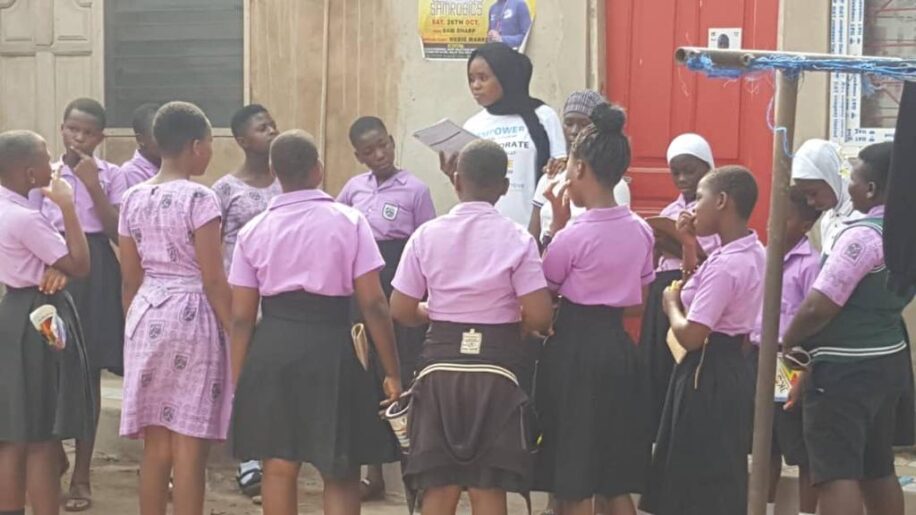
Get Global is a fantastic education programme which is run in schools, through Move the World. This program has impacted much in the life of the students and the community. I believe the Get Global programme is greatly needed, first by imparting knowledge about the Sustainable Development Goals (SDGs) to the students and also by how the goals are linked together.
Move the World has impacted my life as a facilitator by teaching me more about the SDGs and am also happy to impact that to the students. The SDGs are very important to the students because it helps students understand about the the challenges in their country and community and how they can be solved.
As Move the World we are trying to end some problems in my community as a whole. And this is been impacted into the youth and students who are the future leaders in the community. I thought I would just mention some project we work with alongside the youth and how they influence the community
1. SDG 1: Business Training through Jewellery making. Students learn how to reduce poverty in the community through creativity and bracelet making.
2. SDG 2: Project Grow a Bean. This project to aims at reducing hunger in the community by teaching students how to grow a bean plant from an empty coconut shell, soil and water.
3. SDG 3: Mindfulness Practice. This practice is taught to encourage the good health and wellbeing of the people in the community through active meditation and breathing techniques. Focusing on our bodies as our instruments of success.
4. SDG 4: Power of Education. Students are taught some wonderful quotes from great personalities throughout history and how they impact todays world. Students also have the opportunity to make a buddy friend with a younger student to foster growth and mentorship.
5. SDG 5: Humans Together. Gender Equality is a challenging subject which we introduce to help the youth understand what equality means and give them an understanding that although we have differences we are all equal.
6. SDG 6: StreetsmART. StreetsmART is a clean up and recycling exercise in the community that focuses on students personal responsibility of their surroundings.
The question you may be asking is ‘how this project influences the community if we only work with students?’ The answer is yes we work alongside students; but the students go out and teach friends and family in the community which helps us influence the community as a whole.
“Just as ripples spread out when a single pebble is dropped into water, the actions of individuals can have far-reaching effects.” – Dalia Lama
Practicing Healthy Dialoguing is always good. It gives room for diverse points of views and opinions thereby paving way for creativity and innovation. A community with an effective dialoguing on social issues stands the chance to develop faster within the confines of peace and tranquillity. Move the World (MTW) is one international non for profit organisation that has adopted this strategy in the development of the Medie community in Ghana.
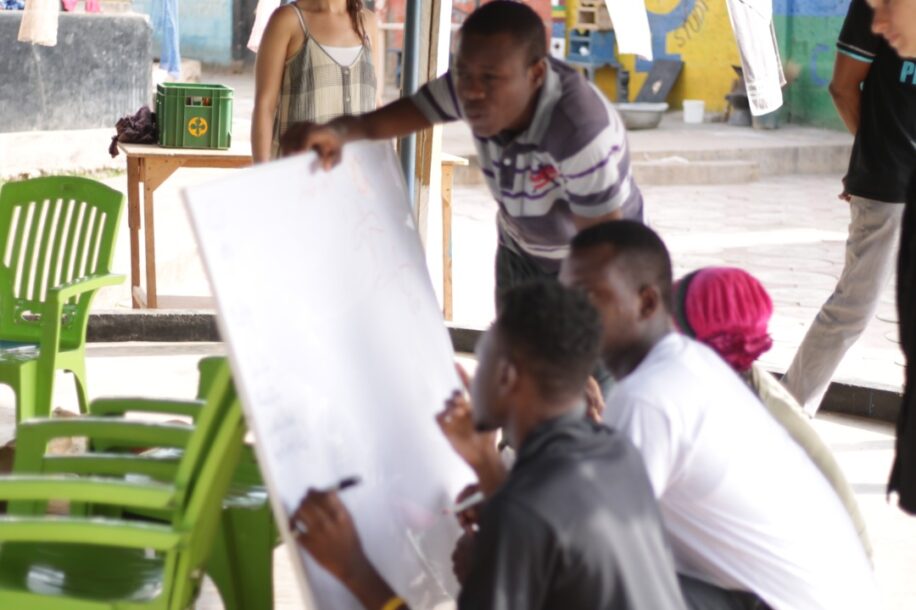
Dialoguing has been one the essentials tools MTW has been employing over years in their quest to improve the lives of people they come across. At the top management level, decisions are made solely on dialoguing. I have personally witness and participated in most of their dialogues which is mostly academically driven, passion motivated and democratically organised. Such discussions are centred on crucial issues facing the communities in which they working in of which mostly the end results is always productive.
It was once said by Sol Stein that “Dialogue is a lean language in which every word counts” and that is exactly what MTW is meant for. In the scene of dialogue, every word counts, every idea is welcome, no one is wrong and no one is right. This type of atmosphere relegates fear, inferiority complex and other negative attitudes and vibes that inhibits a healthy conversation.
As the whole world preaches democracy, peace and tranquillity, I together with the MTW family make a general appeal to all nations, families, ethnic groups, institutions to adapt to the use of healthy dialogue in dealing with issues since it has proven to us to be an essential tool to development.
A happy mind is a healthy mind. And a healthy mind is good for the body. ~ Dalai Lama.
SDG #3 Good health and wellbeing pledges to ensure healthy lives and promote wellbeing for all at all ages. Health is affected by a multitude of factors from environmental, psychological, social and economic.
Health relates to physical, mental and social status, and therefore our wellbeing centres on connection, being active, learning as well as give and take.
Get Global Programme in its session activities as well as the Covid19 Workbook lay strong emphasis on children’s health and helping them understand the importance of their bodies, mental and physical health.
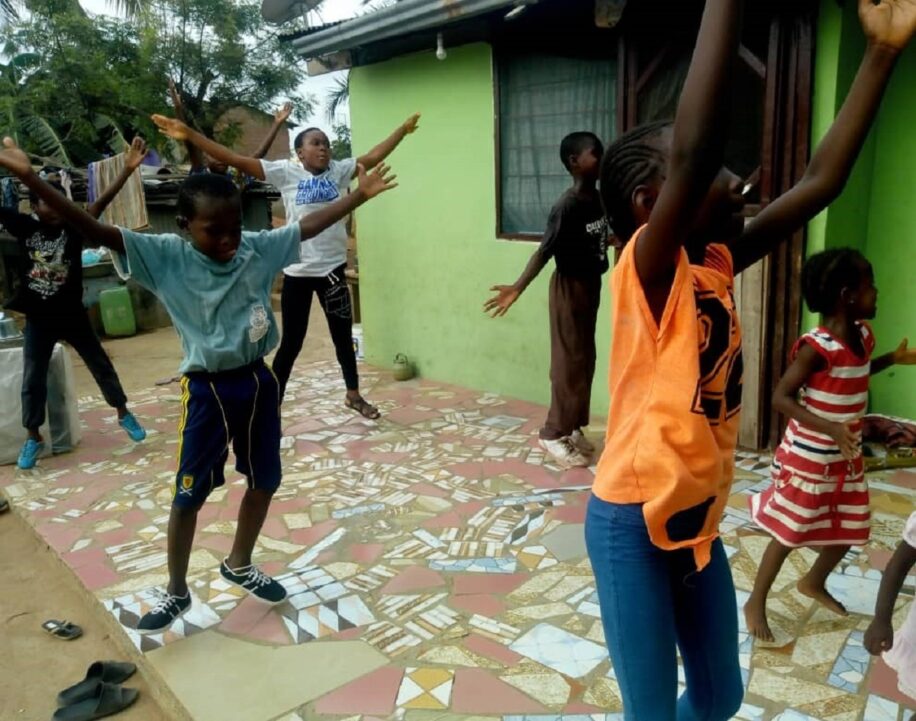
With this interest in mind, we took inspiration from the Covid19 workbook donated by MTW which rekindled our energy and enthusiasm to workout.
Take your workout with you, inspire your families and friends. Our health is key as we survive.
Learning about food or any food-related topic brings complete joy to kids. This joy is present in the 4th and 5th Get Global Sessions when we focus on SDG Goal 2 (Zero Hunger).
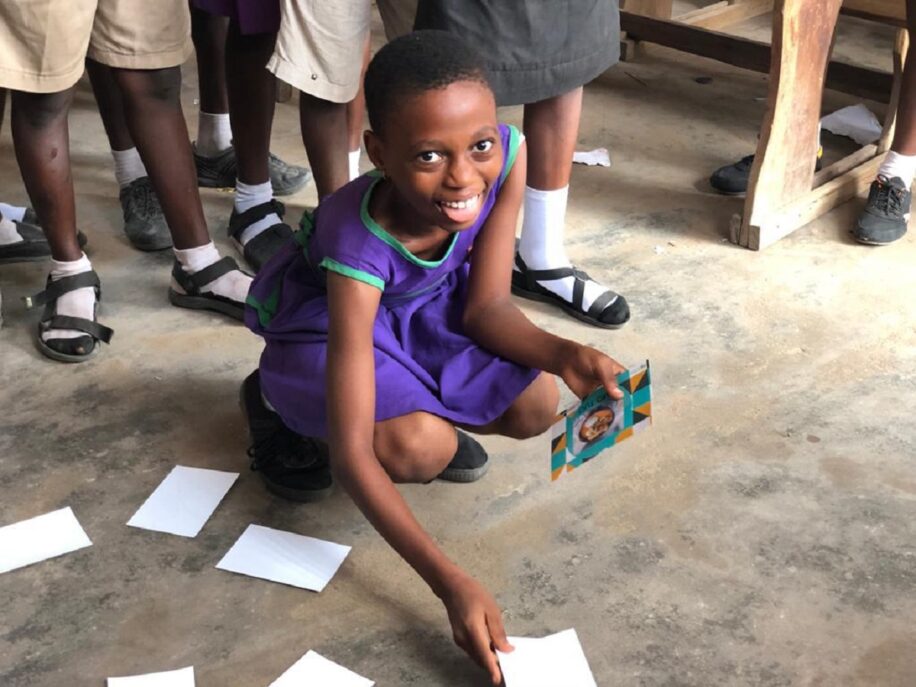
The Minefield Game which employs a food-theme is another Game-based activity used at Get Global sessions to train students on the SDGs. The game places emphasis on concentration, teamwork and teaches kids about different kinds of foods and their sources.
How the game is played: Items needed
Game cards: some cards with different foods pictures while others are blank
A large platform or surface
Activities
Just as is accustomed, the group is split into different teams.
The cards containing the foods and the blank cards are then spread face-down on the floor space randomly but in rows.
All teams are to stand behind the cards with each team delegating a student to commence and the rest take turns.
The first team’s representative chooses from a row to turn over.
If a team turns over a card with food, they place it face down and continue to turn till the turn over a blank card.
Once a blank card is turned, all cards turned will be turned face down in their spots and the delegated student goes to the end of their team line for the next team to try.
If the next team choice of card picked is a card with a picture of food, they continue the game until they turn over a blank card and go back to the starting line.
The team to turn all cards with foods without turning over a blank card is adjudged the winner.
The minefield activity is a highly interactive and engaging game that encourages students to learn about different Ghanaian staple foods and how they are prepared. The game is incorporated to bring on a light-hearted experience for kids on the adverse impacts of hunger in the world.
“If you want to eliminate hunger, everybody has to be involved.” – Bono
Goal 2: End hunger, achieve food security and improved nutrition and promote sustainable agriculture
The aim of Goal 2 is to end all forms of hunger and malnutrition among people especially by making sure all children have access to safe, sufficient and nutritious food all year round.
Interesting Facts To Note
The global stats on the number of undernourished people was declining until 2015. Today, more than 820 million people regularly go to bed hungry, of whom about 135 million suffer from acute hunger largely due to man-made conflicts, climate change and economic downturns according to the United Nations.
Two out of every three employed workers experiencing malnourishment are in the agricultural sector. Poor nutrition causes nearly half (45 per cent) of deaths in children under five – 3.1 million children each year.
149 million children under 5 years of age — 22 percent of the global under-5 population—were still chronically undernourished in 2018.
Progress Made So Far
The fight against hunger has seen some progress over the past 15 years. Globally, the proportion of undernourished people declined from 15 percent in 2000 – 2002 to 11 percent in 2014 – 2016.
MTW’s Involvement In Achieving Goal 2
The Get Global Program, I would admit is a strategic initiative designed to help contribute to achieving this goal by developing the awareness capacity and skills of project participant in rural Ghana.
During the Goal No. 2 session, facilitators like myself have the objective of developing the communication, personal responsibility and forecast planning of beneficiaries.
Through innovative activities like Lines of Communication, a What-Do-You-Know-About-SDG2 True or False Game, a Grow A Bean Project and Keeping It Alive assignment, youths not only gain a deeper understanding of the facts about hunger around the world, how to avoid food waste and also basic agricultural skills in planting and learning how to keep a garden..
State of Goal 2 During COVID19
According to the UN, scarcity of food and prevalence of malnutrition are experiencing additional growing trends should nothing effective and immediate is done about productivity of farmers and supply of food to vulnerable areas especially now that countries are on lockdowns.
In light of the pandemic’s effects on the food and agricultural sector, prompt measures are needed to ensure that food supply chains are kept alive to mitigate the risk of large shocks that have a considerable impact on everybody, especially on the poor and the most vulnerable.
What You Can Do To Help Achieve Goal 2
According to unstats.un.org, achieving this goal will require better access to food and the widespread promotion of sustainable agriculture. This entails improving the productivity and incomes of small-scale farmers by promoting equal access to land, technology and markets, sustainable food production systems and resilient agricultural practices. It also requires increased investments through international cooperation to bolster the productive capacity of agriculture in developing countries.
So how does one get him or herself involved in helping achieve this goal? Mother Teresa once said, “If you can’t feed a hundred people, then feed just one.” Mother Teresa.
Move The World adheres to this principle by encouraging each student on our Get Global program to plant and grow a bean for their household. With this, students develop keen interest in agricultural activities to feed future generations.
You could support MTW in implementing these social intervention initiatives by organising your personal fundraising event for MTW or through some ideas on Our donations page
In conclusion
With more than a quarter of a billion people potentially at the brink of starvation, the increase in hunger from 2015 requires immediate and emergency response from all. Meeting the immediate food needs of the vulnerable, boosting social protection programs and keeping the local supply chain moving could be the top three key things I would suggest utmost priority must be given to by all stakeholders – government, policy makers, investors, entrepreneurs, businesses, non profits etc!